Highlights of the Cistern
Descend into Istanbul’s ancient subterranean reservoir. This curated route guides you through the architectural marvels, legendary sculptures and atmospheric chambers that define the Basilica Cistern.
First Panoramic View
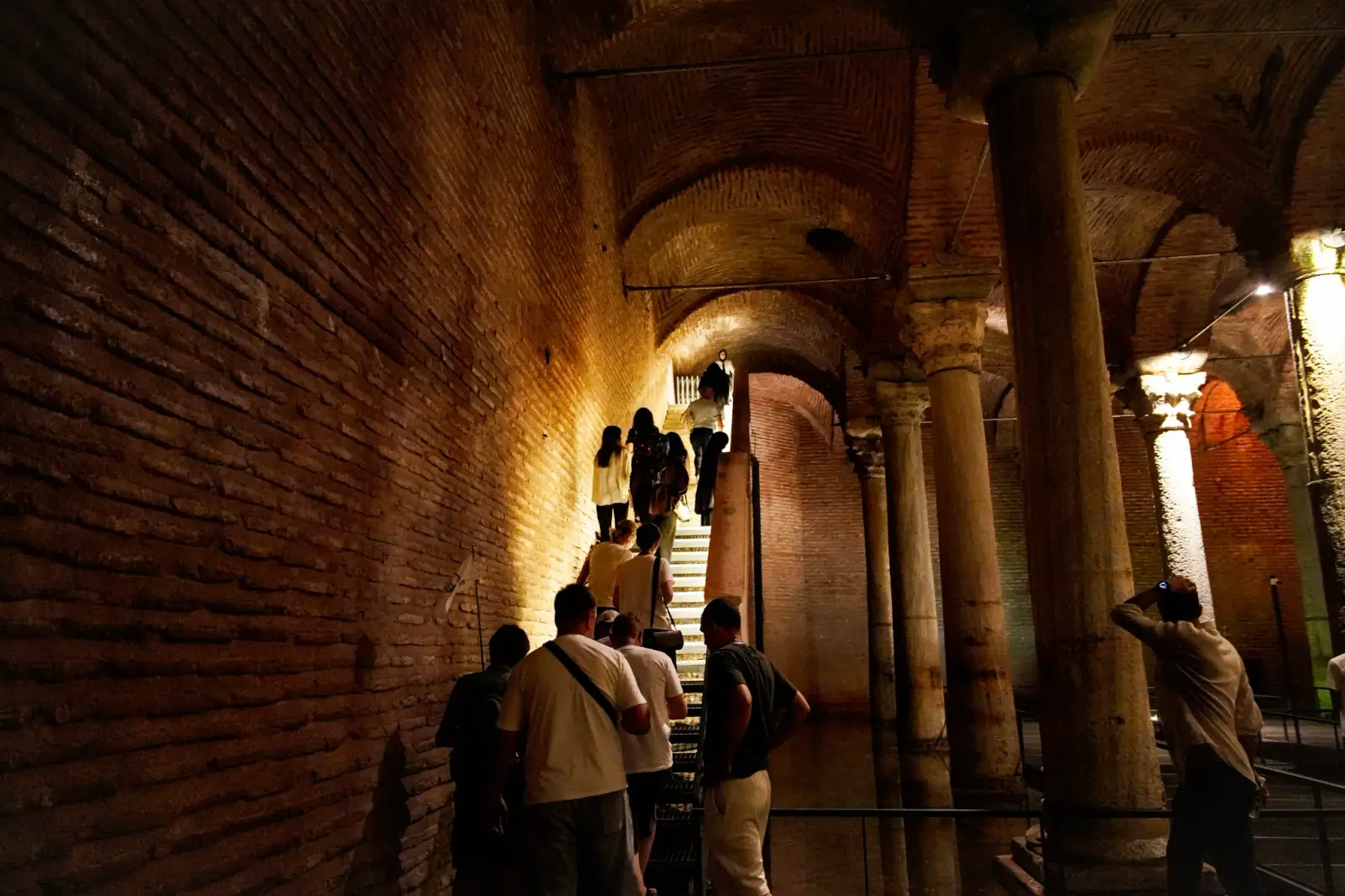
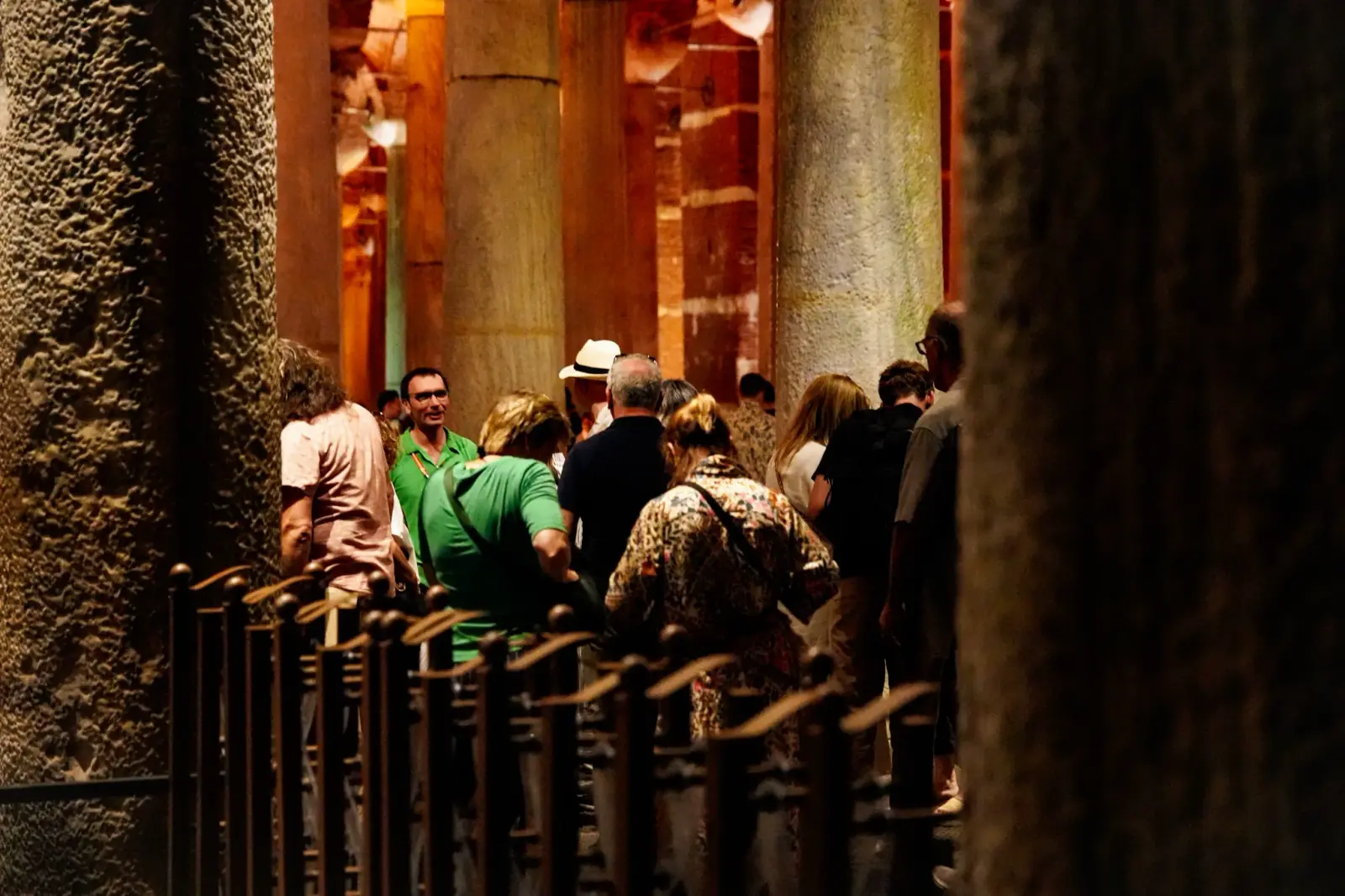
As you descend the stone stairs from the bustling streets of Sultanahmet, the temperature drops and the light fades. The first landing offers a breathtaking view over the vast underground chamber, revealing a seemingly endless expanse of lit columns stretching into the darkness.
Forest of 336 Columns
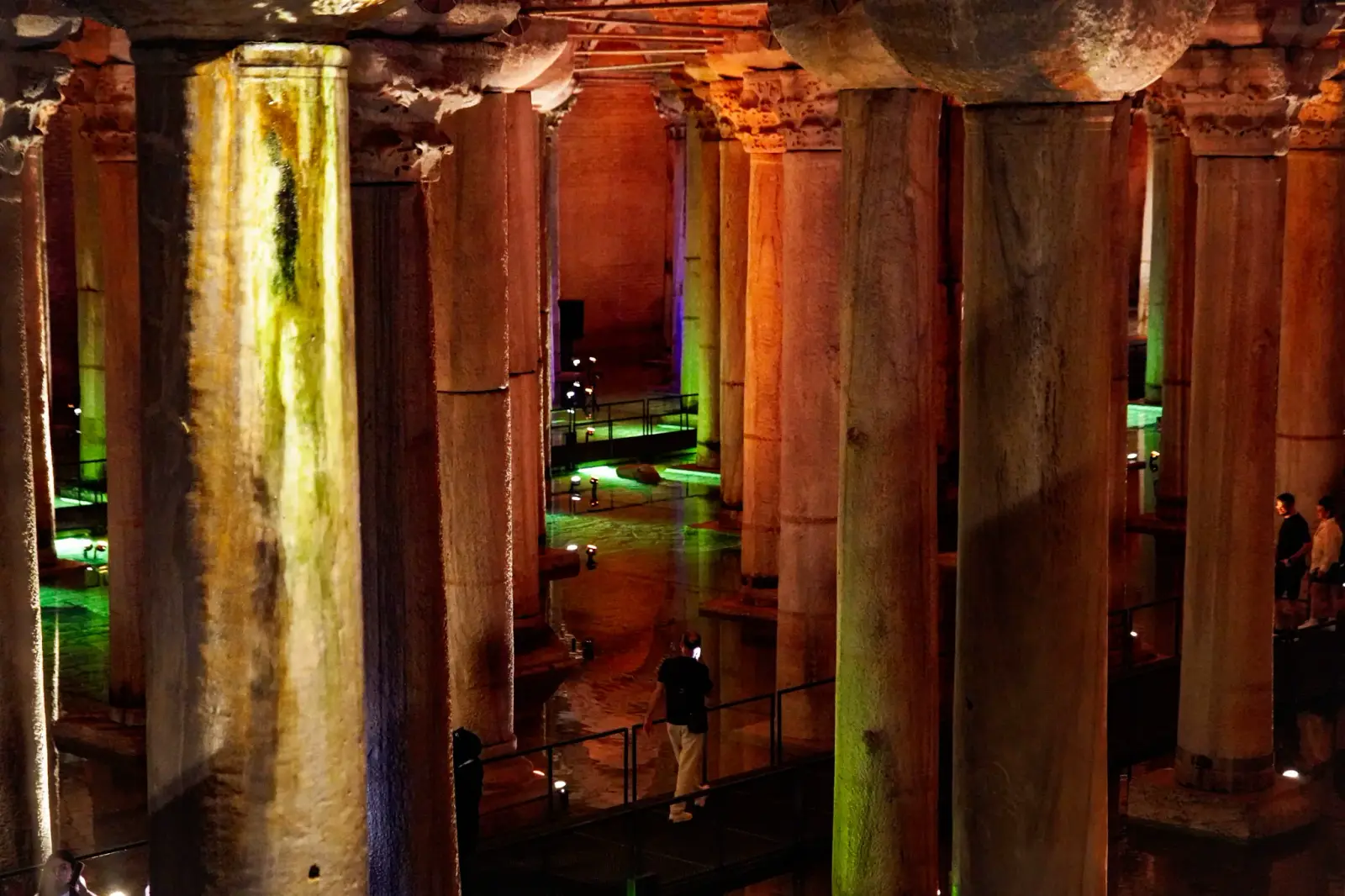
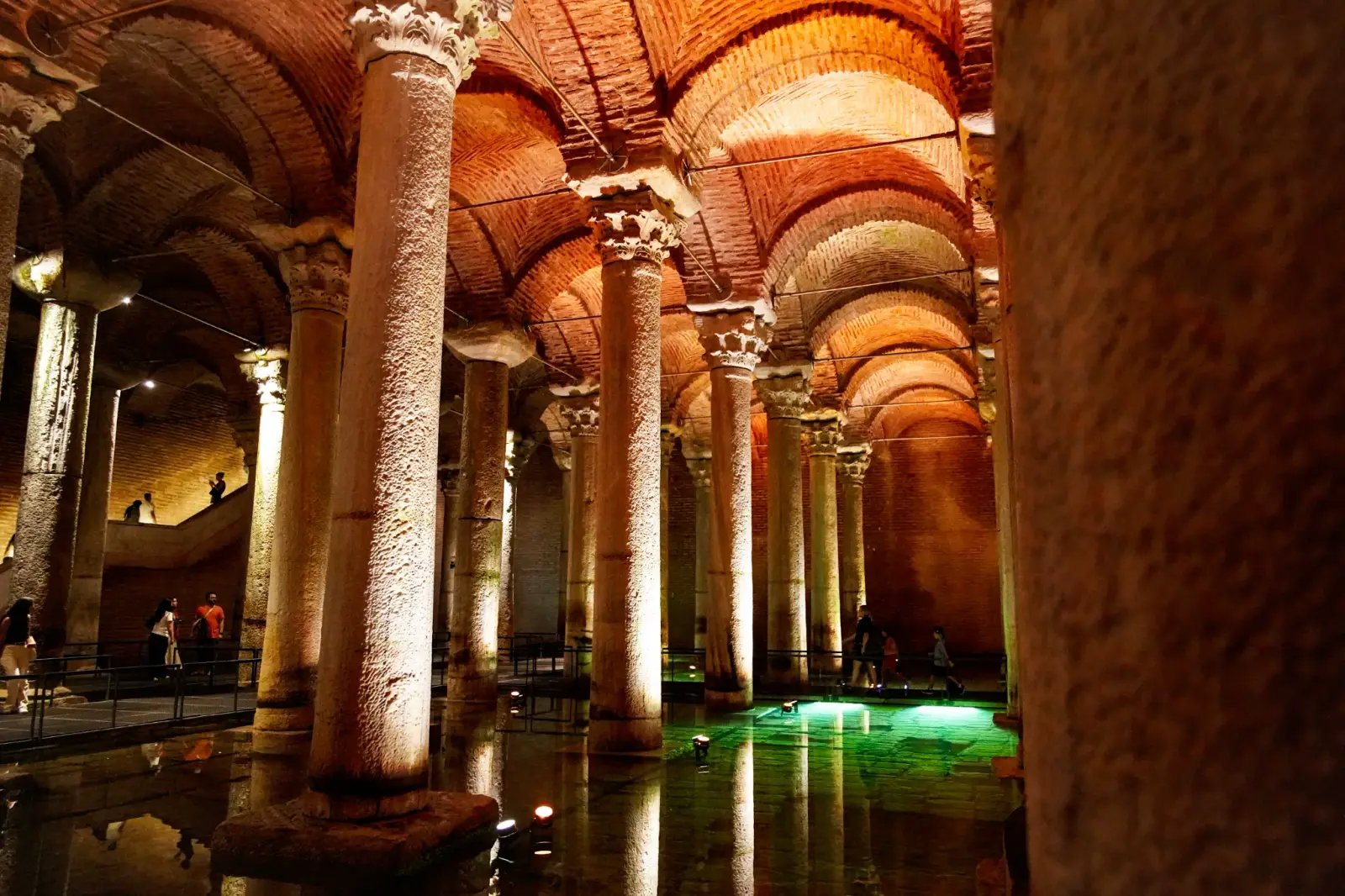
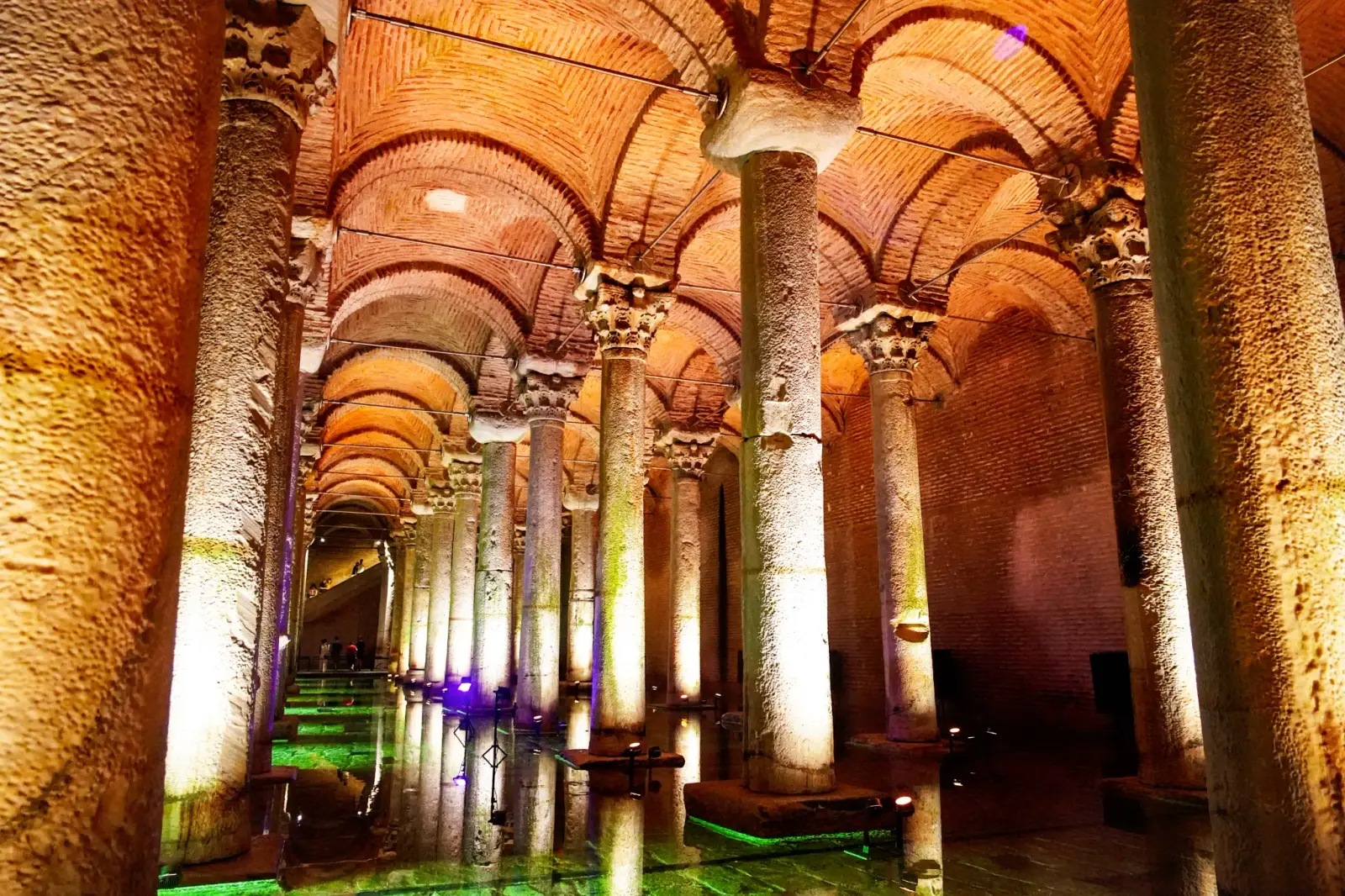
The ceiling is carried by a forest of 336 marble columns, each about nine metres high, set in 12 rows of 28 roughly 4.8 metres apart. Most were reused from older Roman buildings, which is why ornate Corinthian capitals stand beside entirely plain ones.
The Weeping Column
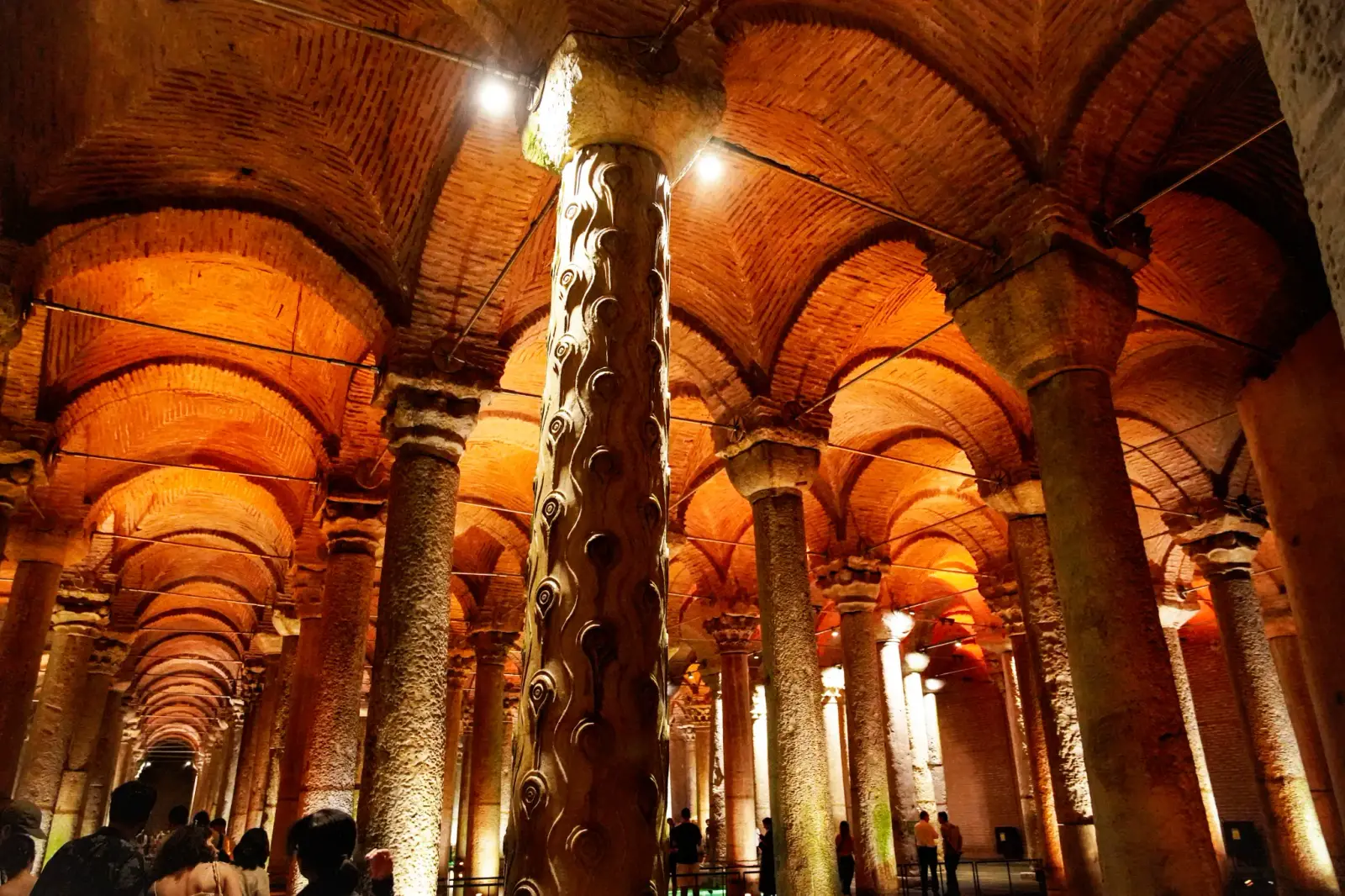
Carved with stylised tears, this column stands apart from the rest and stays continuously wet. Legend has it that it honours the hundreds of workers who died during construction.
Brick Vaults and Arches
Look up to see the structural genius of Byzantine engineering. The ceiling is a system of firebrick vaults and arches that spreads the enormous weight of the earth above evenly across the slender columns.
Water and Reflection
The cistern still holds shallow water, which works as a vast dark mirror. The modern lighting is calculated to maximise those reflections, creating an illusion of infinite depth and doubling the architecture.
The Gorgon Bases
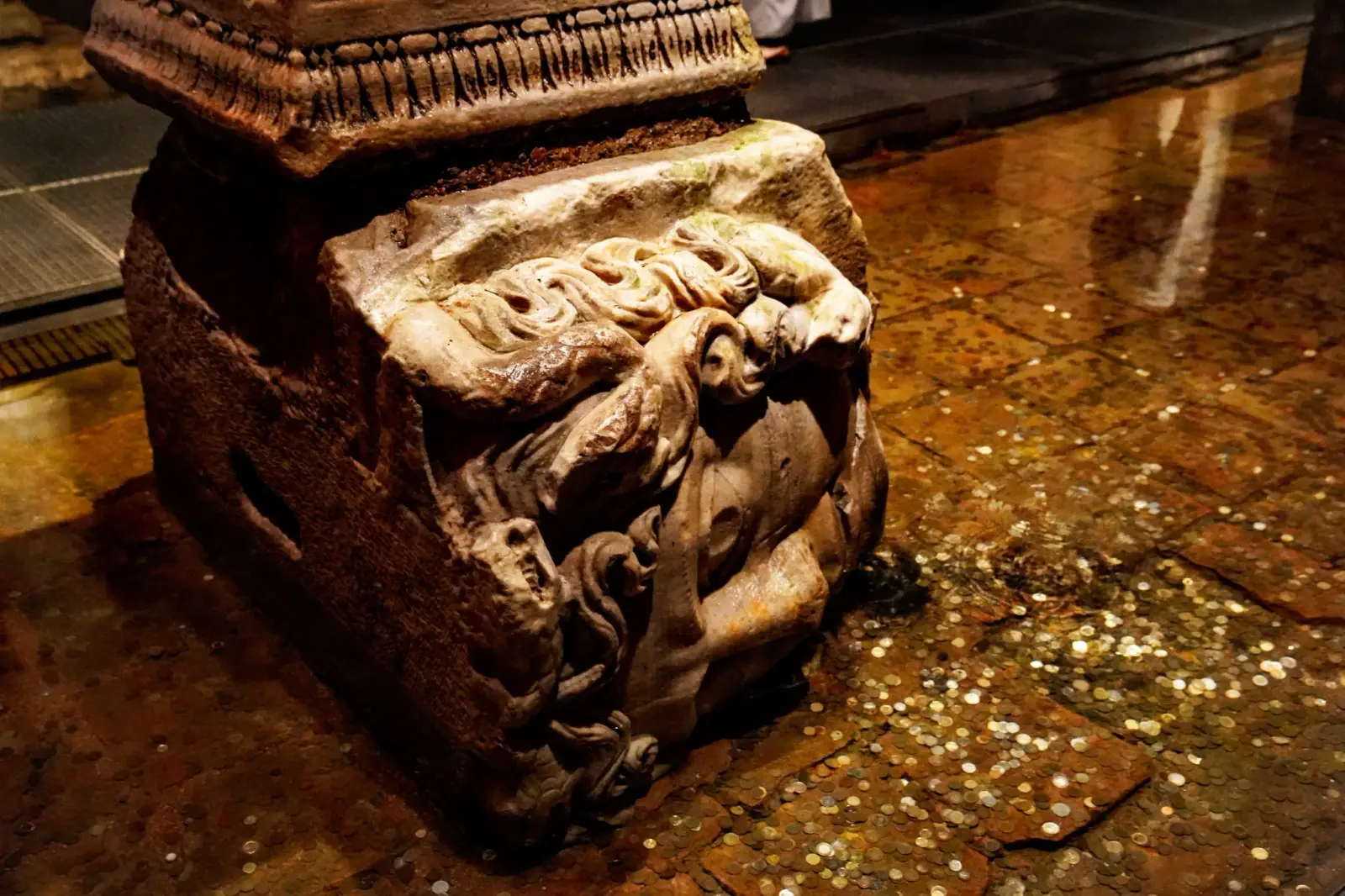
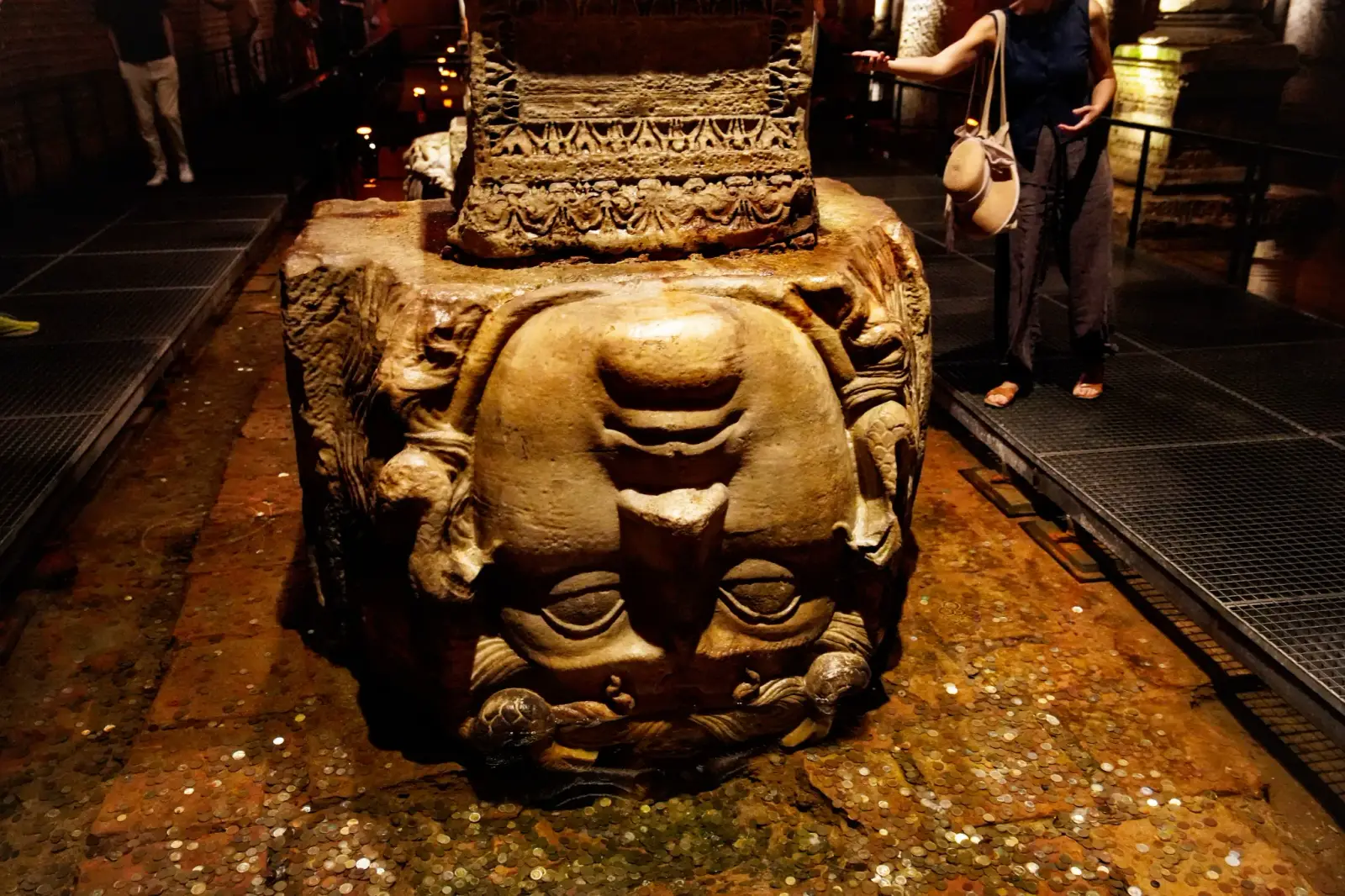
In the north-west corner, two enormous carved Medusa heads serve as column bases. Their placement remains one of the cistern's greatest archaeological mysteries.
Sideways Medusa Head
Set on its side, this Roman masterpiece was most likely taken from a late Roman building. Scholars still argue whether the orientation was purely practical or a deliberate move to negate the Gorgon’s petrifying gaze.
Inverted Medusa Head
The second head, nearby, is placed entirely upside down. The pragmatic explanation is that it gave exactly the height the column needed — but the image keeps folklore and debate alive.
Contemporary Interventions
Since the recent restorations the cistern occasionally hosts restrained temporary art installations. They are curated to converse with the ancient architecture, offering new readings of space, light and history without disturbing the monument.
View current exhibitions