The Medusa
Heads
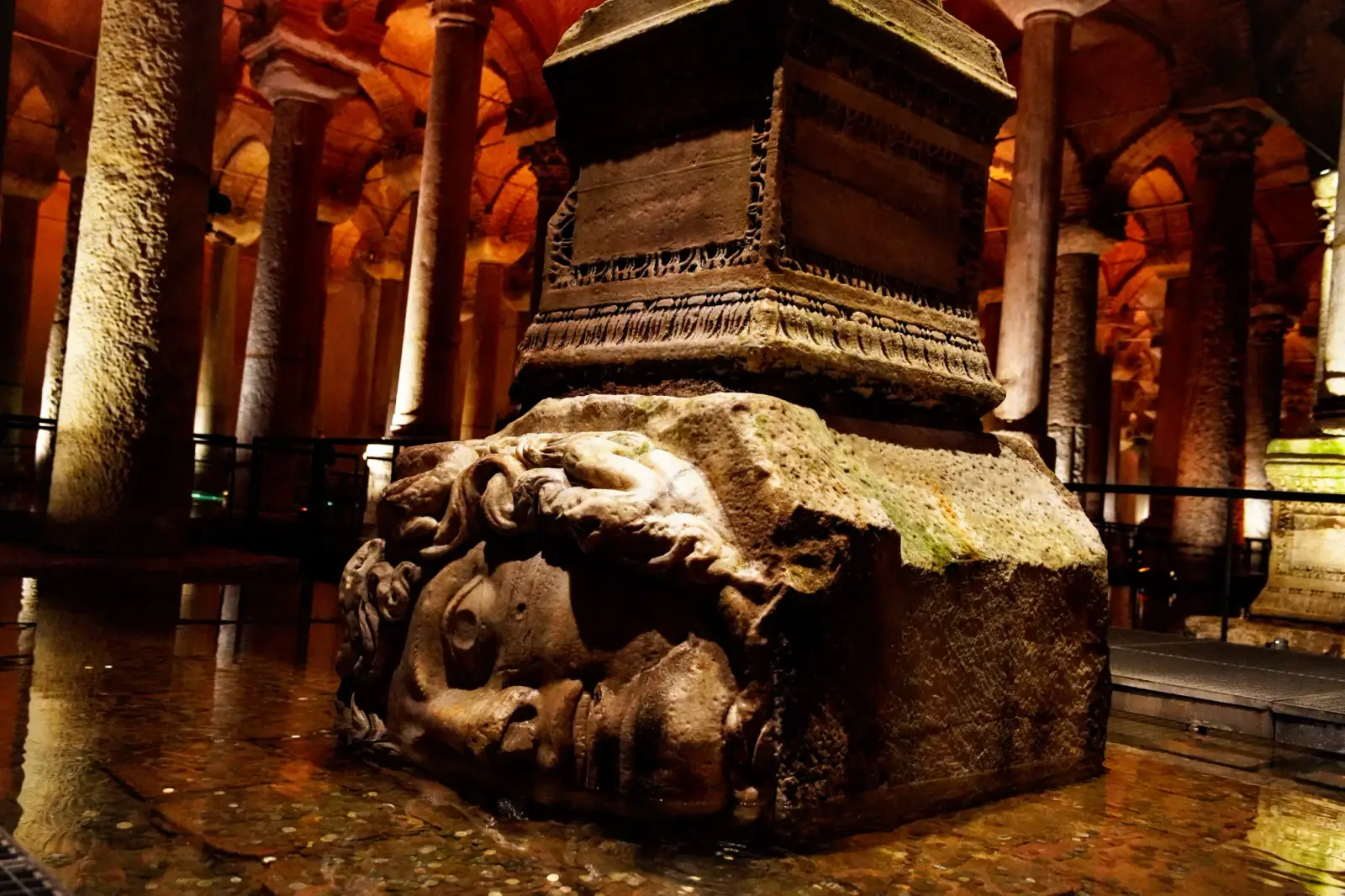
Deep in the north-western corner of the Basilica Cistern rest two monumental Gorgon heads, silently anchoring columns in the shallow water. Their origins and unusual placement remain one of Istanbul's most captivating archaeological puzzles.
The Carvings
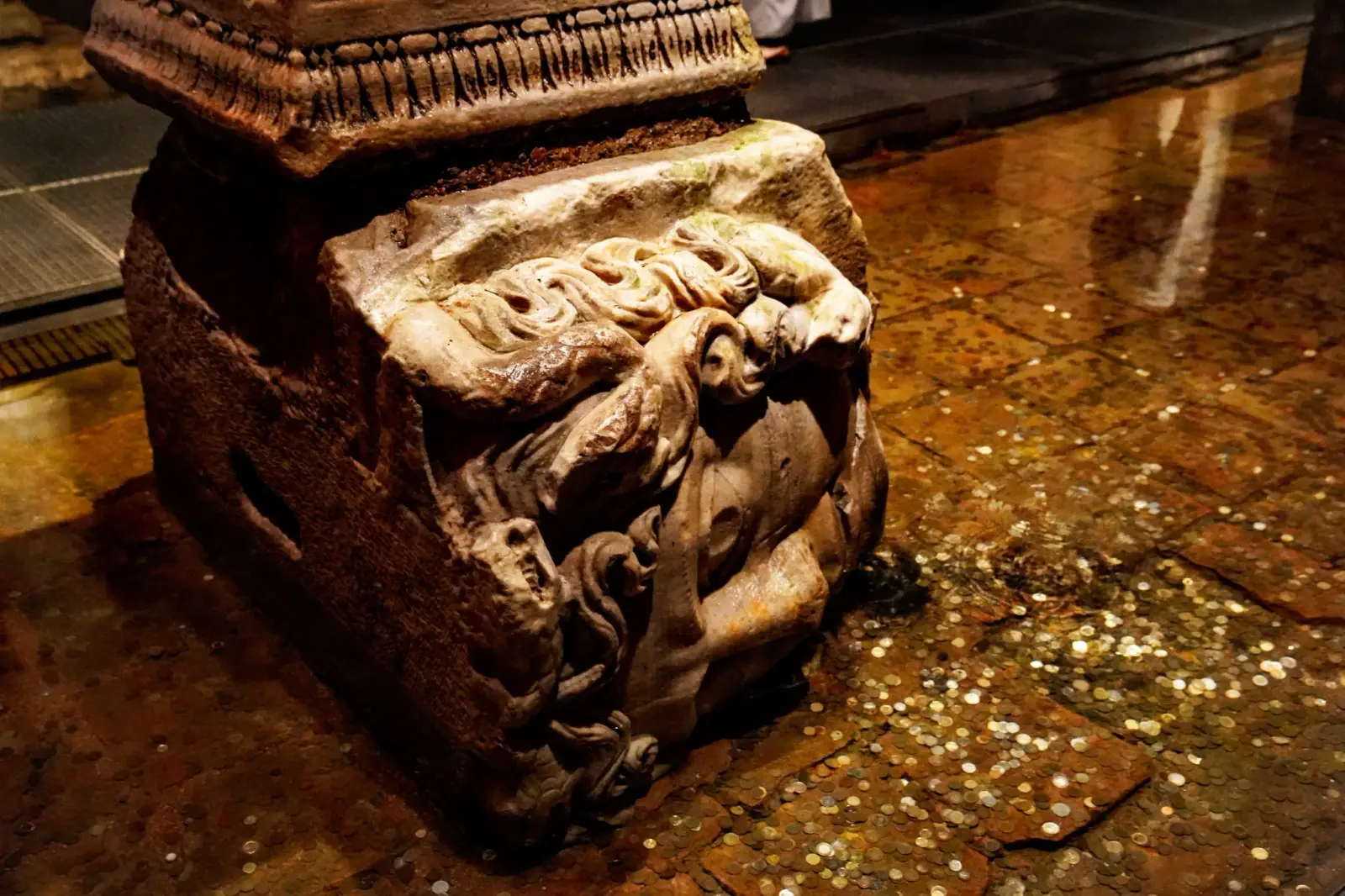
The Sideways Medusa
Set laterally beneath a standard column shaft, this block rests on its side. The deeply undercut carving suggests it came from a late Roman monument before being repurposed here.
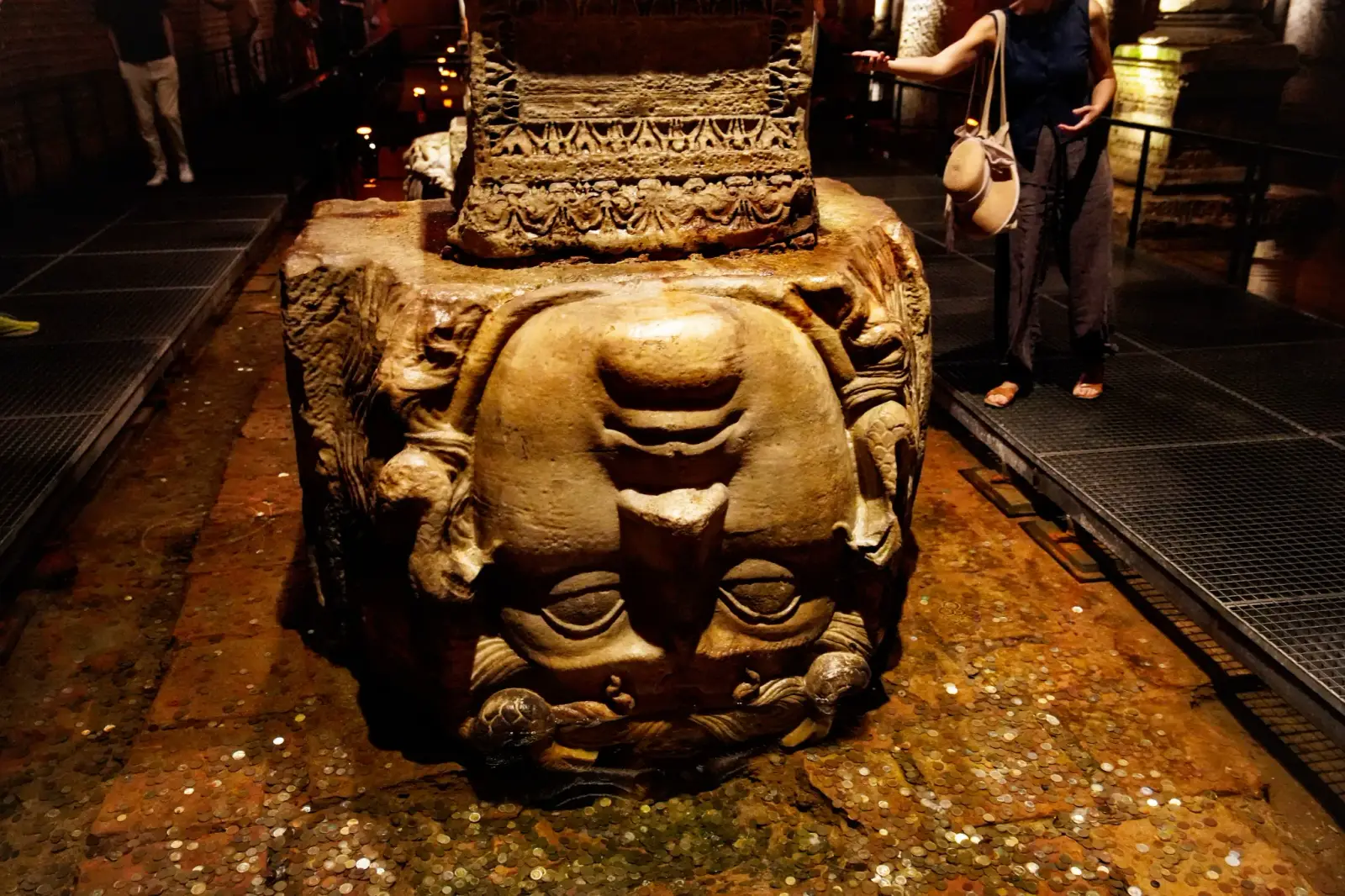
The Inverted Medusa
Placed completely upside down, this second Gorgon head supports a column next to the first. The inversion is a deliberate structural choice that has fuelled centuries of speculation.
Perspectives &
Theories
Making sense of the Medusa heads means moving between historical documentation, archaeological pragmatism and enduring local myth.
Spolia from Antiquity
The Medusa heads are prime examples of spolia — the reuse of earlier building material or decorative sculpture in a new monument. The cistern, built under Emperor Justinian I (527–565 AD), used 336 marble columns, many gathered from older ruined temples and structures across the empire. The heads arrived late in construction to solve a specific structural need in the north-west corner, where the floor level dropped.
Pragmatic Engineering
Archaeologists broadly agree that the orientation of the heads — sideways and inverted — was driven by engineering pragmatism rather than superstition. The blocks were carved for a different architectural context. Reused as plinths, turning them gave the flattest, most stable bearing surface for the weight of the columns and the vaulted brick ceiling above; their decorative orientation simply did not matter.
Deflecting the Gaze
In local lore and classical myth, the gaze of the Gorgon Medusa turned onlookers to stone. Popular legend holds that the Byzantine builders set the heads upside down and sideways to negate that gaze and protect the cistern and its water from dark magic. Romantic as it is, the theory sits awkwardly with the pragmatism of Byzantine engineering.