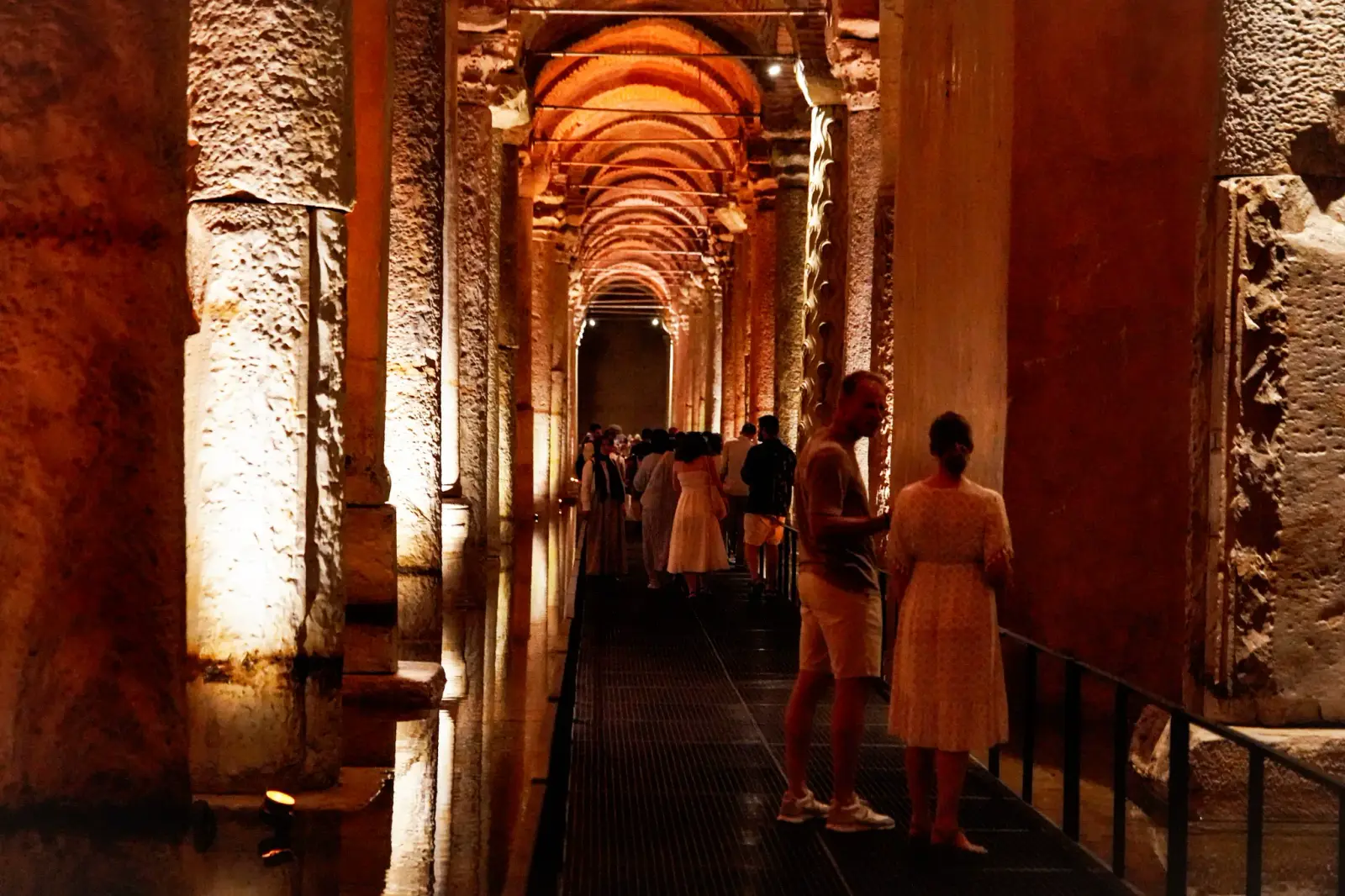
A Monument of Water, Stone, and Time.
Historical records concerning the Basilica Cistern (Yerebatan Sarnıcı) vary across Byzantine and Ottoman chronicles, and this timeline gives the dating that museum publications and the standard archaeological literature agree on. Where a date is disputed or approximate, it is written as approximate rather than rounded to a year it cannot support.
Primary Source: Verified through Procopius’ De Aedificiis (Buildings of Justinian).
Secondary Record: Derived from Pierre Gilles’ 1545 travelogues.
Archival Sketch, c. 1780
Built on the site of an earlier public basilica, the Great Cistern was an engineering work of late antiquity, holding an estimated 80,000 tonnes of water across roughly 10,000 square metres. Its history reflects the city above it — shifting from vital imperial infrastructure to a forgotten cavern, and finally to a globally revered heritage site.
Sixth century: The Great Construction
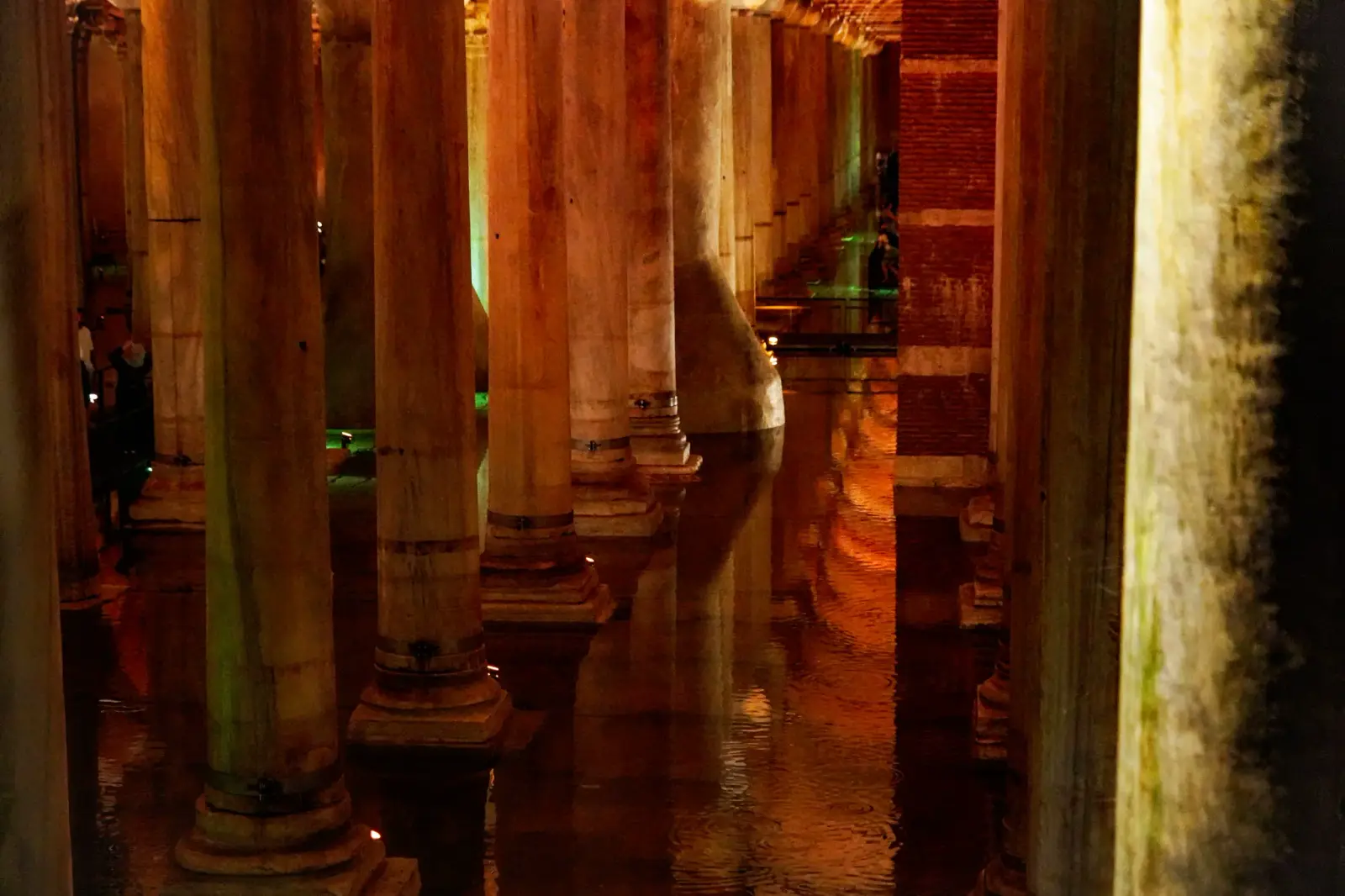
Following the Nika riots, Emperor Justinian I commissions the expansion of an earlier cistern to meet the growing water demands of the Great Palace and the buildings around it. Over 7,000 labourers are reported to have worked on it, using 336 marble columns salvaged from ruined temples across the empire.
1453: The Ottoman Transition
After the Ottoman conquest the cistern supplies water to the gardens of Topkapı Palace for a short period. Preferring running water to standing reservoirs, however, the Ottomans build their own water systems, and the cistern slowly fades from imperial memory.
1545: Rediscovery
The French scholar Petrus Gyllius (Pierre Gilles), researching Byzantine antiquities, investigates reports of residents drawing water — and catching fish — through holes in their basement floors. He finds the entrance and rows through the submerged forest of columns, returning the cistern to Western awareness.
1985 & 2022: Modern Eras
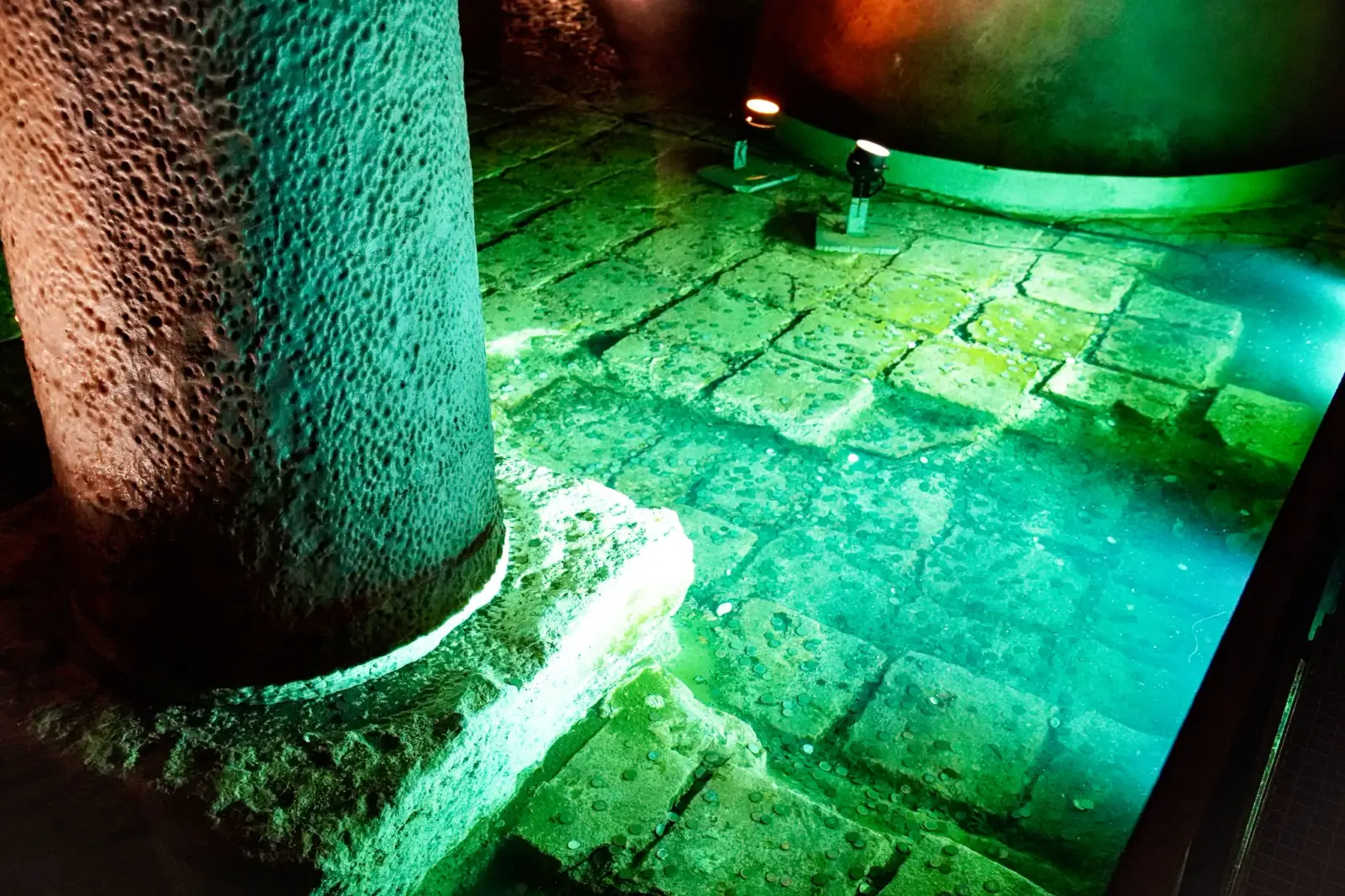
A major clean-out in 1985 removes 50,000 tonnes of mud and reveals the Medusa heads. The comprehensive restoration of 2022 adds contemporary lighting, seismic strengthening and a transparent walkway, turning the cistern into the museum experience it is today.