Day or night: which session is better?
The same columns, a different room. Atmosphere, crowds, lighting, photography, price and logistics, compared line by line.
Planning · Last reviewed 30 August 2026
There is no single better option; it depends on what you are there for. Both sessions show the same physical space — 336 columns, the two Medusa heads, the reflecting water — but the atmosphere, the crowd, the lighting, the price and the logistics differ noticeably.
The short comparison
- Atmosphere — daytime: a classic museum feel with functional lighting. Night: moodier, more dramatic, more theatrical.
- Crowds — daytime: heavy, especially 11:00–15:00. Night: usually 30–50% fewer people.
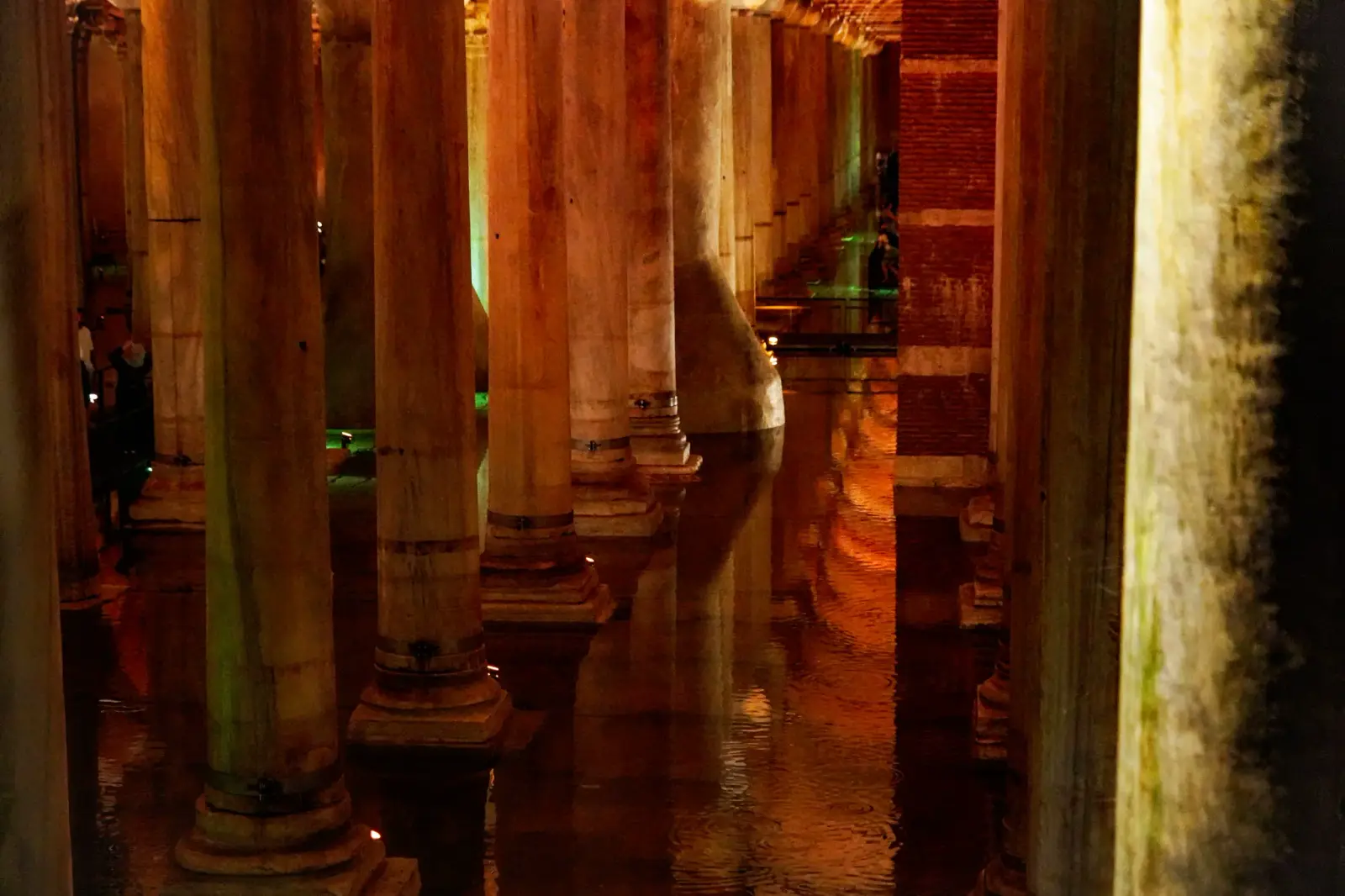
- Lighting — daytime: brighter and more even, with some daylight from the entrance. Night: warmer amber and coloured accents, deeper shadows.
- Photography — daytime: easier on a phone, clearer detail. Night: more cinematic, harder in the dark pockets.
- Price — daytime: lower, around 1,950 TL for a standard foreign ticket. Night: higher, often around 3,000 TL or more.
- Convenience — daytime: easy to combine with Hagia Sophia, the Blue Mosque or Topkapı. Night: evening only, and harder to fit into a full day.
- Best for — daytime: first-time visitors, families, practical itineraries. Night: atmosphere seekers, photographers, people coming back a second time.
The daytime session
This is the visit most people do. You walk the same platforms and see the same columns and Medusa heads, with a clear view of the engineering. Early morning at 09:00, or late afternoon after 16:30, can still feel genuinely peaceful. Midday often means shoulder-to-shoulder crowds and much less of the atmosphere you came for.
In its favour: cheaper, simpler logistics, better for combining with the other Sultanahmet sights, and more straightforward light for casual photographs. Against it: a higher chance of a long queue and a dense room.
The Night Shift
The lighting is deliberately changed — warmer, with stronger contrast and coloured accents on the features that carry them, the Medusa heads included. Capacity is lower, so the space feels quieter and more intimate. On some evenings there is live music, a ney or classical Turkish pieces, though it is not guaranteed.
In its favour: a stronger atmosphere, fewer people, better reflections, a sense of having the place more to yourself. Against it: significantly more expensive, a narrow time window, availability that has been inconsistent since the 2026 change of management — and it costs you the evening.
Which to choose
Choose the daytime if this is your first and possibly only visit to Istanbul, if you are on a budget, if you want to see other things nearby the same day, if you prefer clearer light and simpler logistics, or if you can arrive between 09:00 and 10:30 or in the late afternoon.
Choose the Night Shift if atmosphere matters more to you than price, if you are photographing and want the reflections and the drama, if you have already seen the major daytime sights and want something different in the evening, if crowds bother you enough to pay to avoid them — and if the session is confirmed as running on your dates.
For most first-time visitors a well-timed daytime visit, especially early in the morning, gives the best balance of experience, convenience and value. The Night Shift is a genuine upgrade in atmosphere and worth the premium if that is specifically what you want, but it is not essential. If your schedule and budget allow, some people do both: a quick look by day and a return in the evening. For most travellers, one carefully chosen session is enough. Confirm current Night Shift availability and pricing shortly before you go, because operations have varied since the 2026 transition.
Ready to go down?
Choose your date — your ticket is handed over at a meeting point beside the cistern.
Book tickets