Is it worth visiting? An honest guide
What the cistern does well, what it does not, who is likely to enjoy it and who may leave thinking "is that all?"
Opinion · Last reviewed 30 August 2026
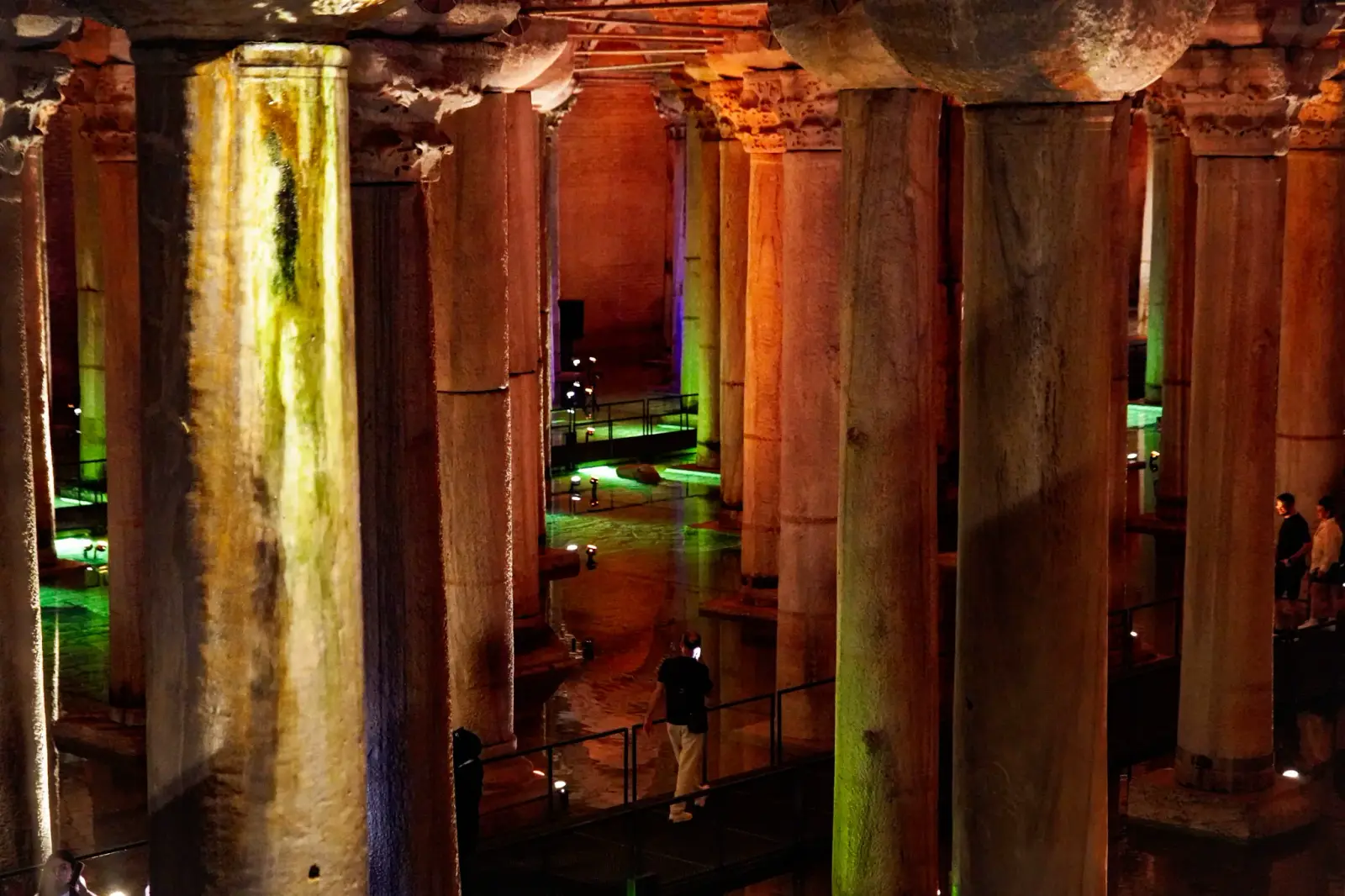
The Basilica Cistern is one of Istanbul’s most famous attractions and one of its most frequently overhyped. After enough photographs of glowing columns reflected in still water, visitors arrive with high expectations. Here is a straight assessment of whether it delivers.
Built in the sixth century under Emperor Justinian I, this vast underground reservoir once supplied the Great Palace of Constantinople. Today it is a dimly lit hall carried by 336 marble columns, many of them recycled from older Roman buildings. The two Medusa heads at the far end are the main attraction. The space is atmospheric, slightly damp and cooler than the street above, and a typical visit lasts 30–45 minutes.
What it does well
- Atmosphere: few places in Istanbul feel as otherworldly. Soft lighting, water reflections and the forest of columns make a mood that photographs only partly catch.
- Historical weight: you are standing inside a working piece of Byzantine engineering nearly 1,500 years old. That carries its own gravity.
- Convenience: it sits in the middle of Sultanahmet, a short walk from Hagia Sophia and the Blue Mosque. It fits into almost any itinerary without a detour.
- Escape from the heat: in summer the underground temperature is a relief in itself.
- The Night Shift: the evening session, with altered lighting, feels more dramatic and is usually less crowded.
The honest drawbacks
- It is smaller and shorter than most people expect. Once you have walked the main platform, seen the Medusa heads and taken your photographs, there is not much else. Some visitors leave thinking "is that all?"
- Crowds can ruin it. Between 11:00 and 15:00 in high season the narrow walkways are congested, and the magic shrinks when you are shuffling shoulder to shoulder with a tour group.
- The price feels high for the size. A foreign adult daytime ticket has been around 1,950 TL in recent pricing, which is steep for forty minutes. The evening ticket costs more.
- The queues are real if you buy on site during a busy period. An advance ticket helps, but security and entry still take time.
- Practical limits: there are stairs, accessibility is limited, the floor can be slippery, and the facilities inside are minimal.
- Recent operational changes: since the 2026 transfer of management, opening details, evening sessions and ticketing have been inconsistent. Check the current status.
Worth it if
- It is your first time in Istanbul and you want one distinctive, atmospheric experience.
- You enjoy history, architecture or photography.
- You can go early in the morning or late in the afternoon.
- You pair it sensibly with the sites nearby rather than treating it as a destination in itself.
It might disappoint if
- You have already seen a lot of atmospheric sites and expect something vast or interactive.
- You dislike crowds and can only go at peak hours.
- You are travelling on a tight budget and every major ticket has to feel substantial.
- You prefer museums with extensive exhibits and interpretation.
How to make it better
- Go at 09:00 or after 16:30. The difference in atmosphere is significant.
- Buy a timed or skip-the-line ticket in advance during high season.
- Do not rush the Medusa heads. They are the highlight for most people.
- If the Night Shift is running and fits your evening, take it for the quieter, more theatrical version.
- Combine it with Hagia Sophia or the Blue Mosque in the same morning rather than making a special trip.
For most first-time visitors to Istanbul, it is worth it: a short, highly atmospheric encounter with Byzantine engineering in a space nothing else in the city resembles. When the crowds are light it feels close to magical. When they are heavy it can feel like an overpriced photo opportunity.
If you have one day in Sultanahmet and limited energy, put Hagia Sophia and the Blue Mosque first. If you have a little more time and want something other than another surface monument, the cistern earns its place. Go early, keep your expectations realistic, and you will probably leave glad you went.
Ready to go down?
Choose your date — your ticket is handed over at a meeting point beside the cistern.
Book tickets